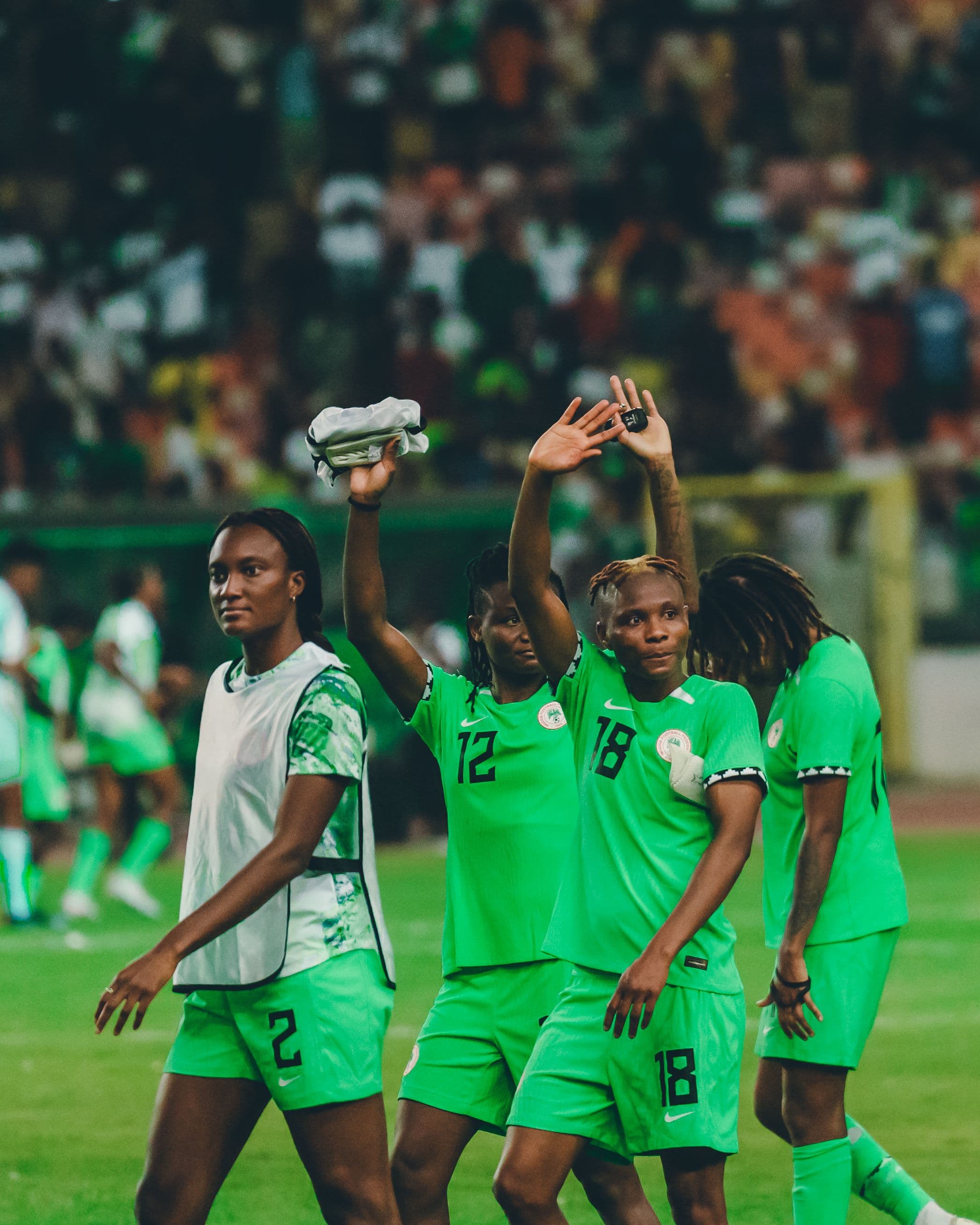
For decades, African football has largely been told through the stories of men. The biggest stadiums, the most famous names, and the continent’s most celebrated moments tend to come from men’s football. However, a different football tale is developing.
Women's football is starting to gain traction on its own.
More women are finding avenues to transition from grassroots football to a professional and international level; more girls are participating, and more events are being held throughout Africa. The Women's Africa Cup of Nations (WAFCON) has grown to be a significant component of that development, not just because of the trophy, but because it gives players and the young girls who watch them prominence and opportunity.
The future of the women's game rests on more than what happens during a tournament, reflected in growing emphasis on grassroots football, coaching, administration, education, and youth development.
A NEW CONTINENTAL HIERARCHY
African women’s football is undergoing a dramatic evolution, a trend made undeniably clear at the 2026 WAFCON. First-time champions Cameroon, surprising finalists Malawi, and bronze-winning Algeria signalled that the old hierarchy is fading.
At the centre of this transition sits Nigeria. With a dominant ten titles, the Super Falcons' legendary track record risked breeding complacency. Their defending 2026 campaign quickly unravelled after an opening 3–2 defeat to Malawi and a mid-stage win over Zambia and Egypt; Nigeria crashed out in the quarterfinals against Cameroon and then missed out on World Cup qualification with a 2–1 loss to South Africa.
A historic streak came to a painful end as Nigeria failed to reach the 2027 FIFA Women’s World Cup, ending an unbroken run of appearances stretching back to 1991. The setback serves as a reminder that sustained investment in women’s football and youth development is essential to maintaining Nigeria’s position at the top of African football.
SCRUTINY AT THE TOP
To understand the failure, the Nigerian Football Federation (NFF) fact-finding committee investigated the root causes across governance, funding, technical direction, and youth development. Beyond pitch performance, the panel noted alleged interference by officials in team selection and coaching appointments, claims that remain unproven. Regardless, the takeaway is clear: administrative weaknesses eventually trickle down to impact the players. To rebuild, the panel called for distinct technical roles, standardised team selection, and a complete revamp of U-15 and U-18 grassroots pipelines.
GRASSROOTS AS THE TRUE FOUNDATION
That brings us to the core of the issue: The Young Players coming up next.
The true future of African football isn't being decided in grand arenas but on school pitches, where young girls first picture themselves on the international stage. Modern development requires a complete ecosystem: CAF's integrated youth tournaments are leading the way by blending athletics, education, and player safety. It takes certified coaches, safe venues, regular match experience, and clear pathways to turn potential into greatness. A championship trophy might spark interest, but only a functioning system gives a young player a place to grow.
Nigeria's pitch has always been rich with natural talent, but raw skill without a structured pipeline eventually gets left behind — a reality exposed when Cameroon, Malawi, and Algeria made history at the 2026 WAFCON. To recover, Nigeria must build sustainable connections between schools, local academies, domestic leagues, and national squads. The Super Falcons shouldn't be the entry point to a player's journey; they should be the ultimate goal.
THE POWER AND LIMITS OF ROLE MODELS
The Super Falcons know the weight of their influence. Following their past tournament triumphs, the squad launched a legacy project delivering kit equipment to grassroots girls' teams throughout Nigeria, directly supporting young players.
That impact is priceless. Seeing a Nigerian woman dominate on the world stage expands a young girl's vision of her own potential; the figure on screen transforms from an elite athlete into living proof of what is achievable.
Yet, inspiration alone is not an infrastructure. The Super Falcons can unlock the door, but Nigeria's governing bodies must construct the pathway through it.
A PURPOSE LARGER THAN SILVERWARE
The true value of African women’s football extends far beyond cabinet trophies. Its ultimate victory lies in opening real doors: the schoolgirl kicking her first ball, the teenager receiving elite coaching, and the rising athlete realising her goals are within reach. This is why WAFCON transcends sport. It offers the continent a stage, its stars a platform, and its youth a horizon to chase.
Nigeria possesses all the talent, history, and passion required to lead. All that remains is building the structure to secure its future.
The Falcons can light the way, but only a functioning system will turn today's young dreamers into tomorrow's national players.