The era of raising millions to deliver groceries to three wealthy postcodes is fading. So is the model that built it: chase a valuation, acquire users with subsidies, hope the infrastructure catches up. It rarely does.
Across Africa, the infrastructure is the problem. Not ambition. Not talent. Not market demand. The basic systems that allow ambition to travel from idea to impact — those are what are missing. Cold chains that keep food alive between farm and market. Financial rails that work where the internet does not. Diagnostic tools that let a clinic do more than guess.
The founders worth studying now are not chasing the next funding round. They are solving unglamorous problems at the infrastructure layer — building the foundation on which everything else will eventually stand. Here are three of them.
Keeping Food Alive: AkoFresh and the Cold Chain Gap
Sub-Saharan Africa loses between 30 and 40 per cent of its harvested food before it reaches a consumer. The crops are grown. The labour is spent. And the produce rots — in the field, on the roadside, at the market — because there is nowhere to preserve it.
This is not a distribution problem; it is an absence of infrastructure. The cold chain, that invisible network of refrigeration and temperature-controlled logistics that more developed countries take for granted, barely exists in most of rural Africa.
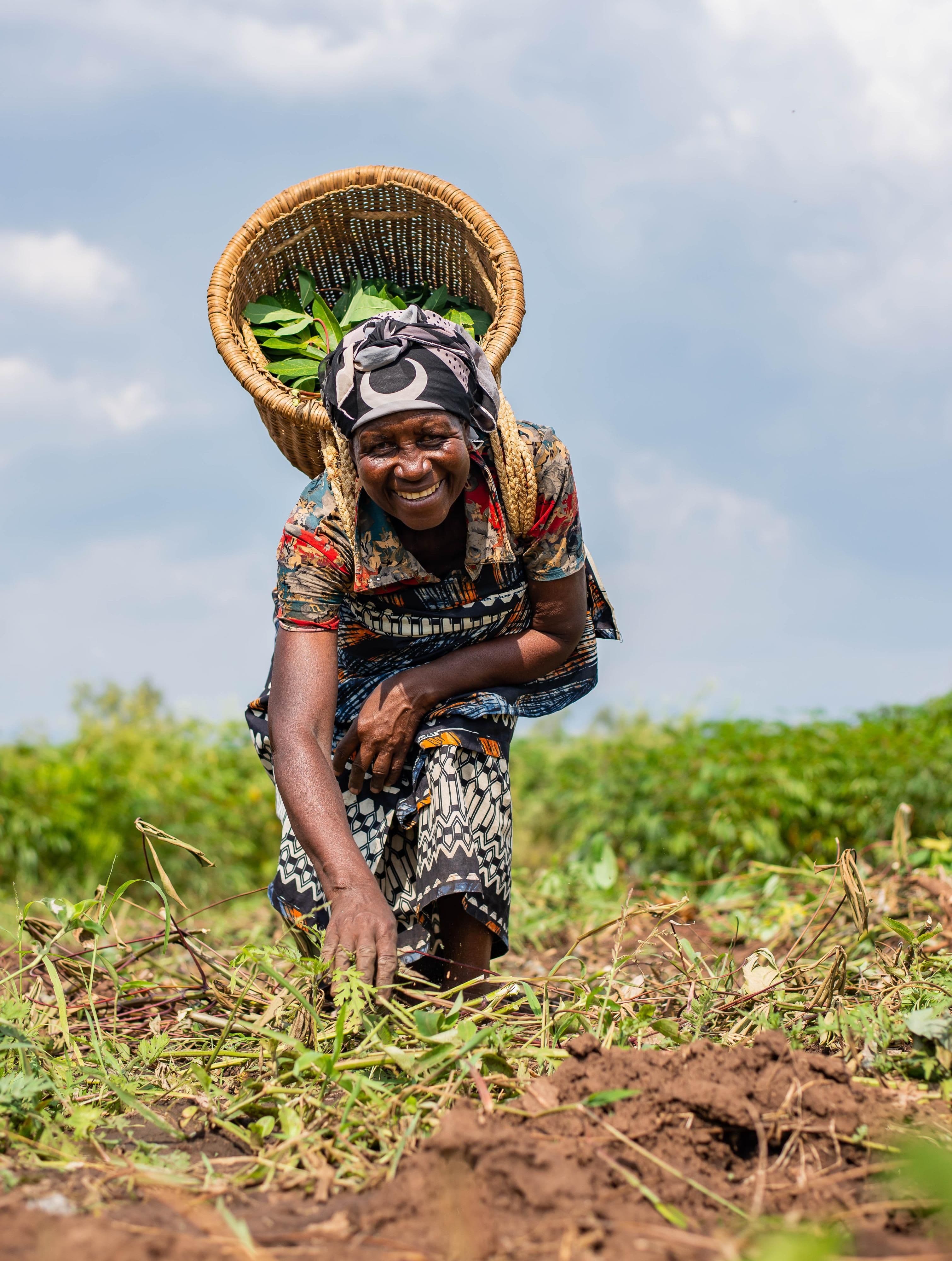
Mathias Charles Yabe understood this at ground level. In 2018, on a volunteer trip to the Akumadan community in Ghana’s Ashanti Region, a 56-year-old farmer walked him through her tomato farm and pointed at the rot. A third of everything she had grown was going to waste. She played her role; the infrastructure had not. The infrastructure could not, because it was not.
Yabe, a graduate of the Kwame Nkrumah University of Science and Technology, co-founded AkoFresh in 2020 with partners across three continents. The solution: a solar-powered cold storage system that extends the shelf life of fruits and vegetables from roughly five days to twenty-one. Entirely off-grid. In 2025, the company launched solar-powered cooling tricycles for last-mile logistics; mobile refrigeration that meets farmers where they are, as opposed to asking them to transport perishable goods to facilities.
The impact does not stop at preservation. When farmers have cold storage, they gain something no app can provide: bargaining power. Without it, a farmer with ripe tomatoes must sell immediately, at whatever price the buyer dictates, because the alternative is waste. With it, the farmer can wait. The cold room does not just store food. It restructures who has leverage in the transaction. That is essentially what infrastructure does: facilitate better terms on which people can operate.
Banking Without Broadband: Moniepoint and Offline-First Finance
In 2024, only one in four people in Sub-Saharan Africa used mobile internet. Where mobile broadband exists, affordability is a barrier: data prices in countries such as Ethiopia have historically exceeded the international affordability benchmark. Build a fintech company on the assumption of a stable internet connection, and you exclude, by design, the people who need financial services most.
Tosin Eniolorunda and Felix Ike saw this clearly. Both former Interswitch engineers founded Moniepoint in Lagos in 2015. They started by providing software to banks, but the deeper problem was obvious: millions of Nigerians were locked out of the financial system. Not because they lacked money. Because they lacked access, the infrastructure was nonexistent.
So they built for reality on the ground.
Moniepoint built an agent network of more than 600,000 people, putting its services within reach of customers and businesses far beyond traditional banking infrastructure. Its model also extends beyond the smartphone: POS terminals are designed to keep transactions moving even when connectivity drops, while USSD provides another route for customers who cannot rely on apps.
In places where a stable internet connection cannot be taken for granted, the company designed around the gap. They did not simply build an app and wait for the network to arrive. They built for the network that already existed.
The results speak plainly. Moniepoint processed approximately ₦412 trillion in 2025 — roughly $294 billion — and claims to handle eight out of ten in-person transactions in Nigeria. The Financial Times named it Africa’s fastest-growing fintech company for two years running. That growth did not come from a clever interface. It came from infrastructure that works in the hardest conditions.
Diagnosis Before Treatment: Ilara Health and the Clinic Equipment Gap
Laboratory testing is estimated to inform up to 70 per cent of medical decisions. Yet across sub-Saharan Africa, more than 500 million people struggle to access even a basic blood test, according to Ilara Health. The equipment exists: haematology machines, ultrasound devices and chemistry analysers. But a single haemogram machine can cost around $7,000 — far beyond the reach of many small peri-urban clinics. The result is a healthcare system in which clinics can serve their communities but lack the tools to diagnose them, leaving patients to travel for tests that could be performed closer to home.
Emilian Popa, alongside Maximilian Mancini and Sameer Afzal Farooq, founded Ilara Health in Nairobi in 2019 to address this gap. The company's original model was straightforward: finance the equipment that small clinics could not afford to buy outright. Ilara partnered with manufacturers of portable diagnostic devices and made them accessible to clinics through flexible payment plans. Clinics could pay 10 to 20 per cent upfront, with the remainder spread over two to three years. Rather than waiting for clinics to acquire expensive equipment themselves, Ilara brought the equipment and financing into the clinic.
The model has since expanded beyond diagnostics into pharmaceuticals, clinic software and other healthcare services. But the underlying idea remains the same: strengthen the small clinics that millions of patients already depend on.
More than 1,100 clinics across 42 Kenyan counties have partnered with Ilara, and more than 1,700 devices have been deployed. Its clinic operating system has registered more than 210,000 patients. Eighty-seven per cent of partner clinics are in low- or low-middle-income neighbourhoods; 60 per cent of registered patients are women, and 25 per cent are children under 12.
These are not vanity metrics. They show who is being reached and what becomes possible when diagnostic equipment is finally within reach.
The Common Thread
Three ventures. Different countries, different sectors, different founders. One insight: the layer that is missing across much of Africa is not the application. It is the infrastructure beneath it.
AkoFresh is not an agritech app. It is a cold room. Moniepoint is not a banking app. It comprises 600,000 agents and offline terminals. Ilara Health is not a healthtech platform. It is a haemogram machine on a payment plan, in a clinic that had nothing before.
You cannot build a farm-to-table marketplace if the food spoils before it leaves the farm. You cannot digitise payments if half your users lack reliable internet access. You cannot improve health outcomes if the clinic cannot run a blood test. The pipe comes first.
The question, then, is not whether you admire these founders. It is whether you can see the pattern. What infrastructure is missing where you are? What unglamorous problem, once solved, would make ten other things possible? Excellence in Africa will not be built on the final layer. It will be built by those willing to lay the first one.