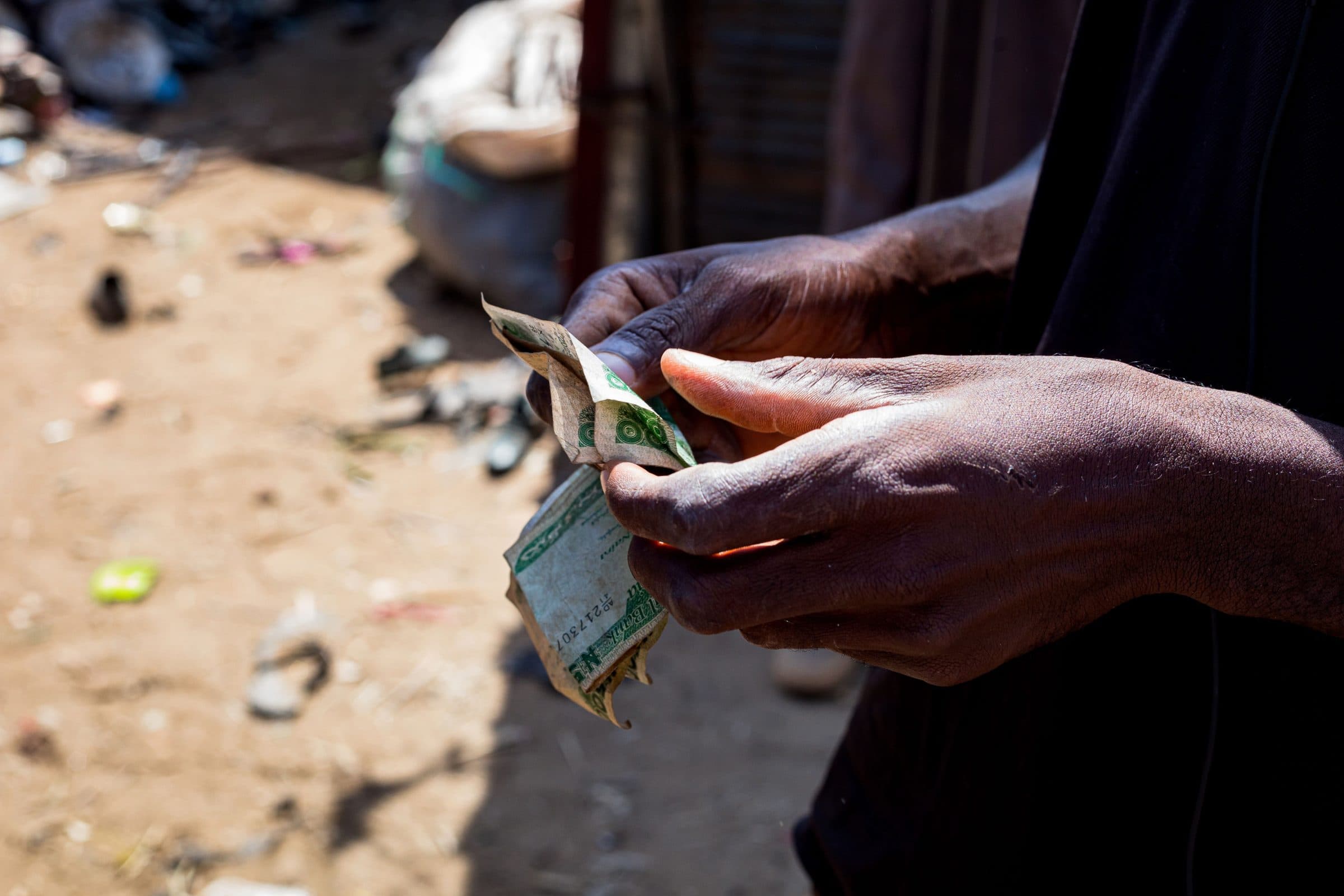
I was thirteen years old when I told my mother what I would do with my first real money. "Mommy, when I grow up and have my own money, the first thing I'll do is buy bags of rice and share it with every family that can't afford it so that everyone can eat to their fill." While other children around me dreamt of becoming doctors or lawyers, mine was a different kind of dream: clear, simple, and rooted in compassion. I pictured a future where the last seat at the table no longer belongs to the poor, where the needy are not fed from the leftovers of the rich, and where every child can dream freely, without the limits of scarcity. This dream of mine has remained ever since, except that the weight of it has only intensified. Over the years, I have shed more tears than I ever imagined, and I have come to see poverty as the enemy because it creeps in slowly, takes away the hope many once had, and never gives them the opportunity to birth the purpose of their existence fully.
It is easy to speak of poverty as a feeling, but in Nigeria, it is measured, and the numbers are heavy. In 2018/19, the Nigeria Living Standards Survey put poverty at forty per cent of the population, about eighty-one million people.² By 2025, the World Bank reported that the rate had climbed to sixty-three per cent, even though inflation had slowed. Between 2019 and 2023, average consumption per person fell by 6.7 per cent, which means families were not just poorer on paper. They were buying less of everything. These are not abstract figures. They are kitchens where the cabinet stays empty a little longer each month. They are parents calculating figures that never add up.
Poverty is more than a shortage of money. The National Bureau of Statistics found that 62.9 per cent of Nigerians, about 133 million people, are multidimensionally poor, deprived of health, education, decent living standards, or work. Where you are born shapes how likely you are to suffer for it. In rural areas, 72 per cent of the people are poor, compared with 42 per cent in urban areas. Across states, the rate runs from 27 per cent in Ondo to 91 per cent in Sokoto. Over half of Nigerian children are affected. A child's future, it seems, can be decided by an address.
Nowhere is this clearer than in the classroom, or rather, the space where a classroom should be. UNICEF reports that 10.2 million children of primary-school age and 8.1 million at the junior secondary level are out of school in Nigeria, making Nigeria home to the largest number of out-of-school children in the world. Of the 5.9 million children who start Primary 1 each year, fewer than half stay long enough to finish junior secondary school. Behind every one of those numbers is a child who once had a dream. Somewhere among them may be the engineer who would have fixed our power supply, the doctor who would have staffed our clinics, the inventor whose idea could have carried this country farther than it has ever gone. Instead, she may be at a roadside stall, selling water to help her family make a living.
For me, all of this has a face. My grandmother was seriously ill, and there was no money to protect her health. The condition she lived in was devastating. She had no bed to lie on, no running water, and no electricity, only a place to lay her head. Her floor was never cemented, so she lived in dust day after day, and because of the family's circumstances, she could barely feed herself. What she needed was financial help, and it never came. She passed away due to a lack of proper care and treatment, and my heart has ached for her ever since. She could have lived so much longer. She could have enjoyed her beloved children a little more and celebrated with us more than she did. Instead, the enemy called poverty robbed her of those years. Her story is not rare. It is repeated in different homes, villages, and states every single day.
I often sit and wonder how much laughter we have lost. Life would be more peaceful, more loving, more understanding without poverty. Children would grow up happier, families would be more closely bonded, and the heavy hearts people carry would finally be lifted. Poverty also damages something we cannot count: confidence. Someone who has been told by circumstances, again and again, that they are not worth investing in begins to believe it, and a country where people stop hoping soon stops growing. It feeds desperation, too, because where there is no work, no food, and no future, some will turn to crime to survive. I do not say this to excuse wrongdoing, only to name one of the many hidden costs of a society that leaves its people behind.
And yet, I refuse to believe it cannot change. Countries such as China, Vietnam, and Bangladesh once fought mass poverty. They brought it down significantly, through growth that reached ordinary people, investment in education and health, and institutions that held leaders accountable. Nigeria already has some of the foundations in place. Its Social Registry covers 86 million people and could carry larger cash transfers if it receives steady domestic funding. The World Bank expects poverty to fall slowly to about 59 per cent by 2028 as inflation eases. Farming, where more than half of the vulnerable people work, has lagged behind other sectors, so backing small farmers could make a real difference. But none of this happens by itself. It takes decisions by leaders and action from the rest of us.
This is what stays with me most. Not only the scale of the problem, but also how small the first step can be. One meal. One child's school fees. One family fed, one clinic funded, one leader asked a hard question. In a country where so many lives have been made invisible, every one of these acts says the same thing: this person matters, and this life is worth saving. The thirteen-year-old who wanted everyone to eat to their fill is still here, and her promise has not changed. I want to keep working until the last seat at the table belongs to everyone, and the enemy called poverty has nowhere left to sit.