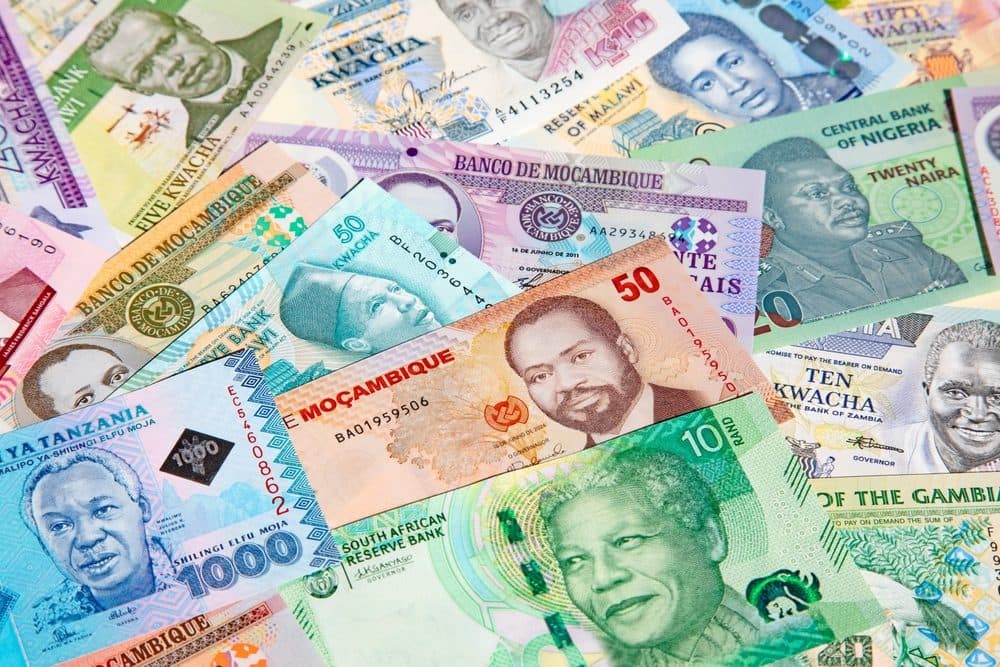
Africa's currencies are anchored in different ways: the CFA franc to the euro with a French guarantee, three southern African currencies to the rand, many others to the dollar in practice, and some to nothing at all. A label such as peg or float tells you the rule, not whether people can get the dollars they need. Part 2 followed four countries, Egypt, Nigeria, Ethiopia and Libya, where the official and street prices of a dollar drifted apart.
At first glance, pegs win
Here is a result that looks like a headline. Among the African countries with enough data for a stability score, those the International Monetary Fund (IMF) classes as currency boards or conventional pegs score about 91 out of 100 on our stability measure. Everyone else scores about 66. Pegs, it seems, buy stability.
This article asks whether that is true, or whether it is something the measure itself produced. It is the part of the series where we test our own work.

How we asked the question
The African Country Index (ACI) scores all 54 African Union states across five pillars: economic strength, economic wellbeing and stability, export performance, global reputation and market potential. Our question sits in the second pillar. Economic Wellbeing and Stability carries 15% of the index and combines three indicators: currency volatility (35% of the pillar), debt as a share of the economy (35%) and ease of doing business (30%).
Not every country has data for every indicator. So we use a minimum-data rule: a pillar is scored only where the index has data for at least half of its indicators. For the stability pillar that means at least two of three. The rule leaves 39 countries with a stability score and 15 without. It is stricter than the way the published report treats blanks, so a few scores here differ from the report's. The ones we quote are the same under both.
We then compared the two groups the IMF's table gave us in Part 1: the 23 countries that are currency boards or conventional pegs, and the 31 that are not. Twenty of the 23 and 19 of the 31 have enough data for a stability score.
First glance: pegged countries look more stable
Côte d'Ivoire, in the West African franc zone, scores 63.6 on the pillar. Rwanda, which the IMF classes as crawl-like, scores 81.4. Both are among the few countries with data for all three indicators.
Across the groups, the pattern is plain. The typical stability score among strict pegs is about 91, against about 66 for the others. The harder the peg, the higher the typical score. Of the 20 strict pegs with a score, 14 belong to the two CFA franc unions. On the face of it, Aya's world looks like the stable one.
But a result is only as good as what it is built from. So we looked inside the pillar.
Inside the pillar
Currency volatility is the biggest single part of the stability pillar, and it is not quite what its name suggests. It is not a market series that measures how much a currency actually moved. It is built from documented peg arrangements and recorded depreciation episodes. A country whose peg held is given a very low volatility score, close to zero. So pegged countries score well on that indicator almost by construction.
The indicator does not treat every peg alike. Libya and Eritrea are IMF-classified pegs, yet the index scores their currencies as volatile, so it is not a pure label. Even so, for most pegs the indicator is largely a record of the peg itself. The ACI report warns of exactly this: calling a peg "near-zero volatility by construction" overstates what a peg guarantees.
That raises a fair question. If the indicator rewards pegs, is the gap in the stability scores telling us anything about stability, or only about how the indicator was built?
Take the volatility indicator away
So we set it aside and looked at what is left. What remains of the pillar is almost entirely debt, because ease of doing business has data for only seven countries. On debt, the two groups look alike: about 83 for strict pegs and about 81 for everyone else. The gap disappears.
We then looked at the whole index. Across all 54 countries, pegged economies did not score higher overall. The typical composite score is about 30 for strict pegs and about 31 for everyone else.
In other words, the stability gap comes from the indicator that is partly a record of the pegs. It does not show up in debt, and it does not show up in the index as a whole.
How to read this result
Five cautions keep the result honest.
It is association, not cause. The indicator that links pegs to stability is partly a record of the pegs themselves, so the index cannot tell us whether a peg causes stability.
The groups are small and uneven. The pillar comparison covers 20 strict pegs and 19 other countries. Fourteen of those 20 belong to two CFA franc unions, so they are two decisions, not fourteen.
The data are thin. For most countries the pillar rests on two indicators, and 15 countries have too little data for a score at all.
It is a snapshot. Rwanda scores 81.4 on the pillar, yet the IMF reports inflation there of 15.7% in August 2026.
A score is not an experience. None of this tells us whether a business owner in any of these countries could get the dollars she needed.
What the ACI can do is show how currency risk is treated in a composite score, and where a stability reading can come from the way an index is built. The lesson is the index's own: a label or a score tells you about the rule and the history. It cannot tell you whether the system works for the person who has to use it. The same problem faces countries that want a different arrangement altogether.
The price of borrowed credibility
The choice of an anchor is also a question about who makes economic decisions, whose interests monetary policy serves and how much room a country has to shape its own development.
Nowhere is that debate sharper than around the CFA franc. Supporters, including officials of the regional central bank, the Central Bank of West African States (BCEAO), point to exchange-rate predictability and the institutional support that comes with the euro peg. Critics, among them the Senegalese economist Ndongo Samba Sylla and the Togolese economist Kako Nubukpo, argue that the system limits monetary independence and carries the legacy of colonial-era relationships. Both sides are describing the same bargain Aya lives inside: the guarantee that gives her certainty is also what limits her central bank.
The Sahel test
Mali, Burkina Faso and Niger have taken that critique furthest. They formed the Alliance of Sahel States and left the Economic Community of West African States (ECOWAS) on 29 January 2025, and their leaders speak often of sovereignty, including monetary sovereignty. Yet the BCEAO still lists all three among the eight members of the West African Monetary Union. The alliance's investment bank had its founding charter signed on 12 December 2025, but a development bank is not a central bank, and it does not by itself replace a currency. In the latest reports we found, from September 2026, all three still use the CFA franc, and no replacement currency or joint monetary authority is in place.
Why the gap between the announcement and the currency? Because a currency is more than a name. A working monetary arrangement needs institutions that can manage liquidity, supervise banks, run payments, set monetary policy and respond to financial stress. It needs reserves, and it needs a market that people trust. Those are the things the CFA franc currently borrows, and a new currency would have to build.
Two precedents that cut both ways
Mali issued its own franc in the early 1960s and rejoined the West African union in 1984. Botswana left the rand area in the 1970s and built its own currency, and the ACI report credits it with exemplary macroeconomic governance and low sovereign risk. That shows leaving is possible. It does not show that leaving caused Botswana's strength, and Mali's return shows how hard it can be.
Borrow or build
So credibility is something you either borrow or build. Borrowing buys certainty now and costs independence. Building buys independence and costs time, reserves and the patience of everyone who needs dollars in the meantime.
This is the thread that runs through all three parts. Aya's certainty is borrowed from a French guarantee. Tunde's reformed market is something Nigeria is trying to build, and the price of the dollar is part of what that has cost. Salma's peg promises credibility that the supply of dollars does not yet support. This is not an argument for or against the franc. It is a reminder that every anchor has a price, and that dropping one means paying for the backing yourself.

So, does a peg make a country stable?
Not by itself. Over three articles we have asked three things. Who anchors Africa's money? The pound, the French franc and the rand built most of the continent's anchors, and the IMF now sorts all 54 currencies by what they do. What happens when an anchor is tested? The official and street prices of a dollar drift apart, queues form, and the cost lands on households and firms. And what can the data say? Our own index finds that pegged countries look more stable only because of an indicator that is partly a record of the pegs.
A peg is a promise, and the promise is only as good as what stands behind it: reserves, a guarantor, a market people trust, and access to the dollars when they are needed. When you meet a currency, you can ask the three questions from Part 2, and you will know more than its label can tell you.
What to take away from Part 3
Pegged countries score higher on the ACI's stability pillar, but the gap comes from a currency-volatility indicator that is partly a record of the pegs.
Without that indicator, the groups look alike on debt, and pegged economies do not score higher across the index as a whole.
The result is an association in thin data, in small groups, and it cannot show cause.
Credibility is borrowed or built. Borrowing buys certainty and costs independence. Building buys independence and costs time, reserves and patience.
The Sahel states show that announcing a new currency is the easy step. Building the institutions behind it is the hard one.

The African Country Index 2026 is an independent, 54-market research project developed by Ariyo Oluwaseun BATi and the team at Benign and Scribble Green, which scores African economies on economic strength, stability, trade performance, global reputation, and market potential. The published report draws on data from the IMF, the World Bank, the United Nations, UNCTAD, UN Tourism, and ITC trade sources, among others. It is a comparative screening tool, not a forecast of investment returns, and is not a substitute for country-, sector-, or transaction-level due diligence. The full report is available to download here: bit.ly/ACI2026Report.