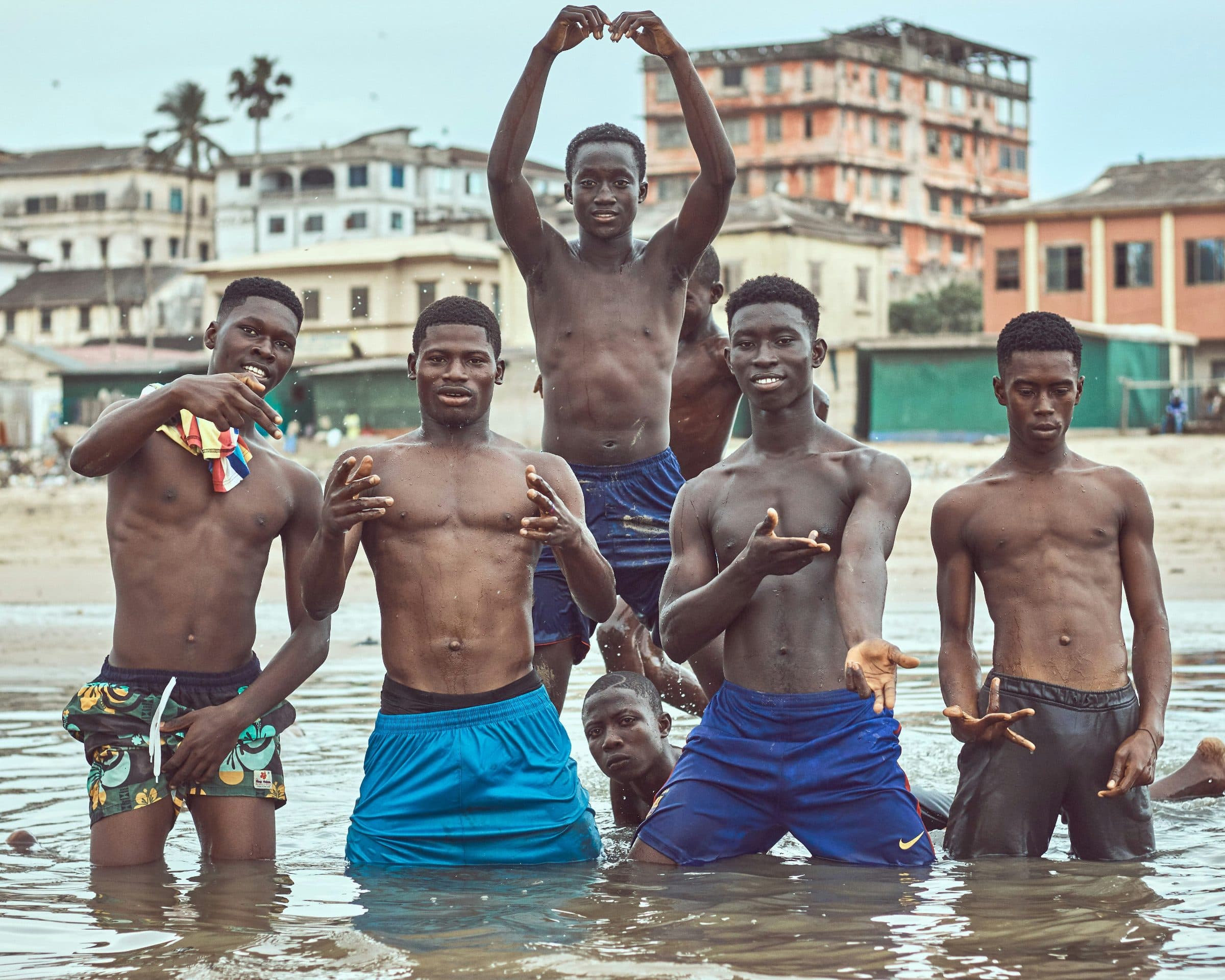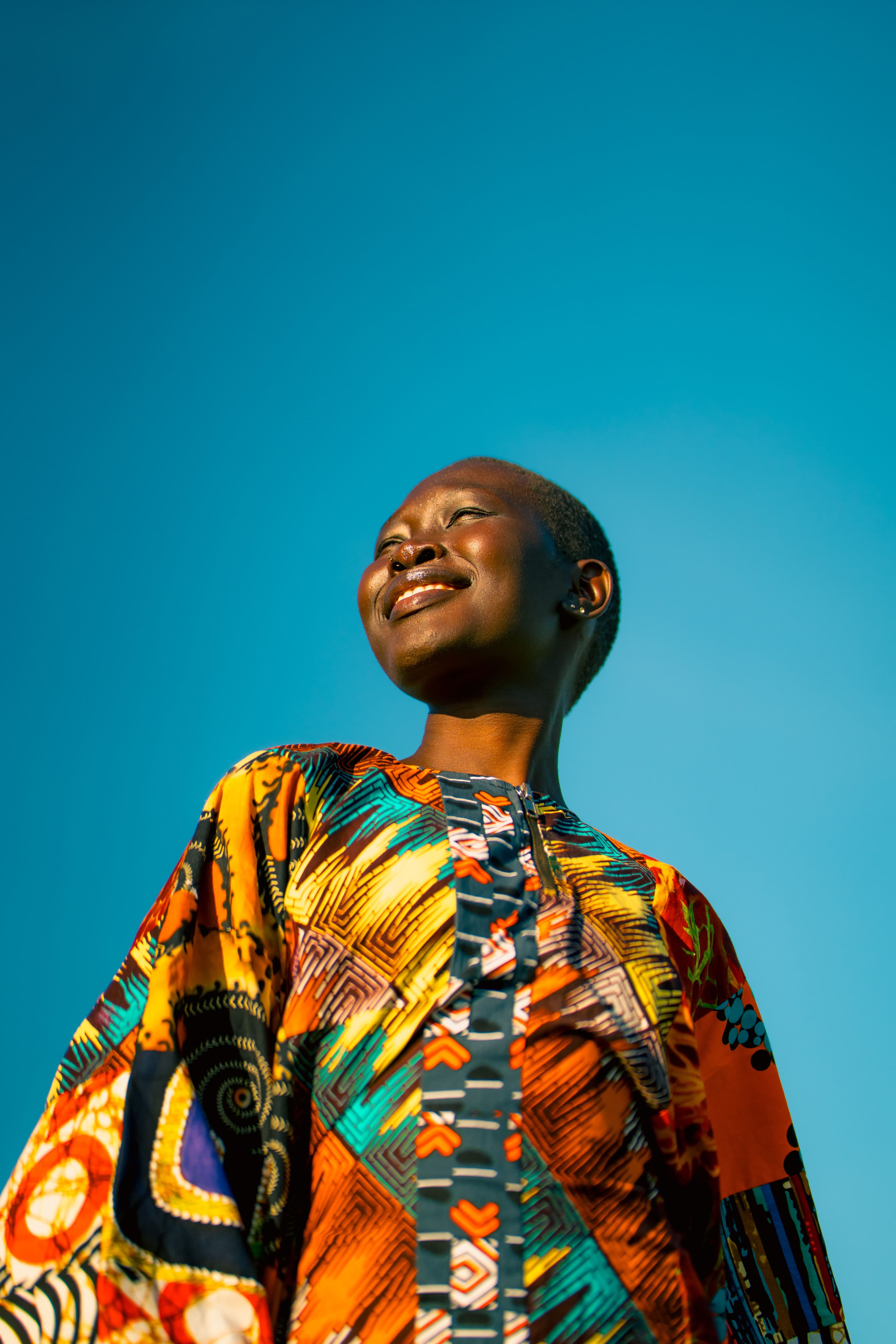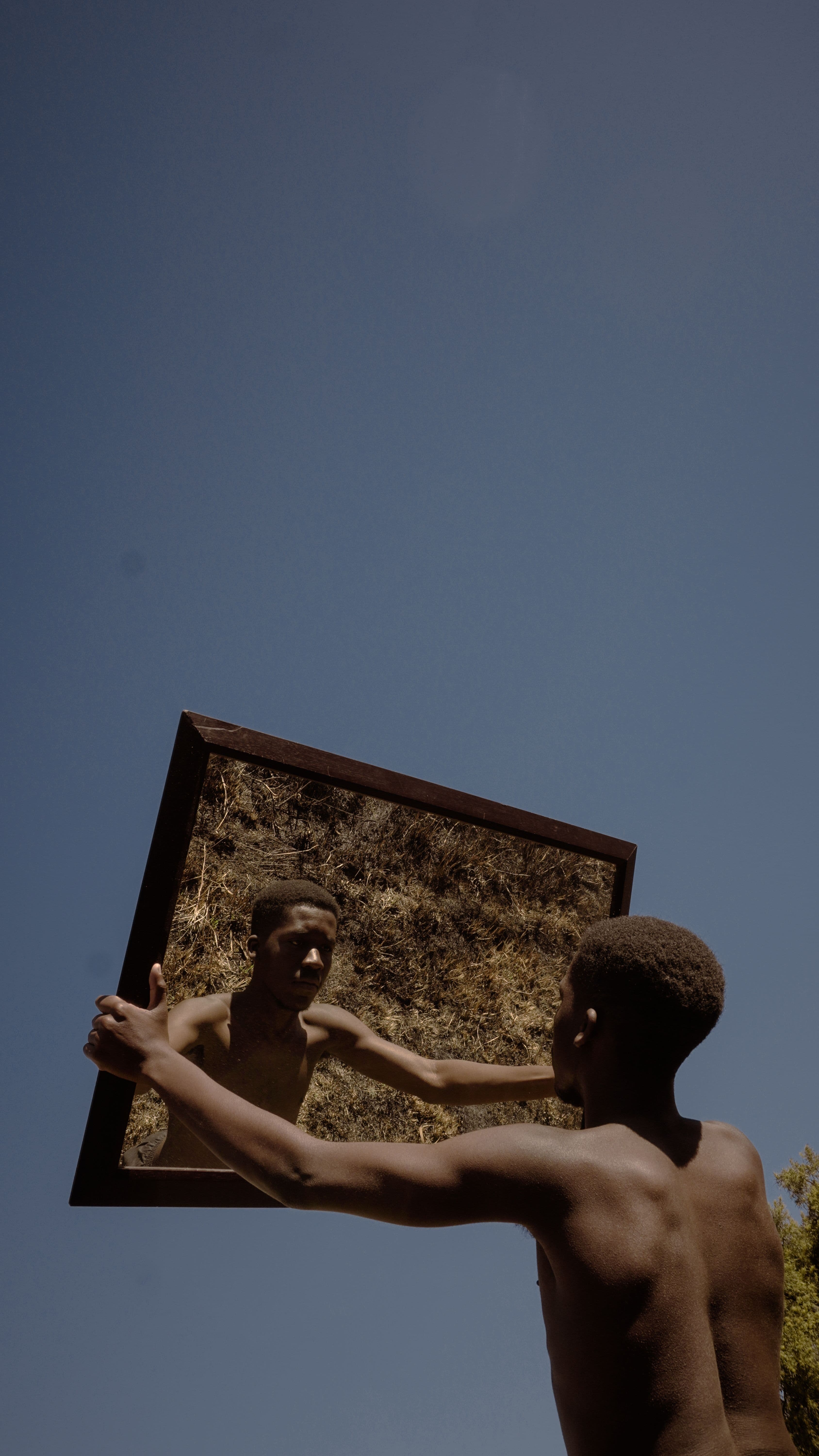
What does Africa look like?
Long before stereotypes and simplified images defined Africa, its societies had many complex visual systems of their own.
What did those visual worlds look like before outsiders tried to define them?
Across the continent, as far back as 4000 BC, we see the ceramic works of the Naqada culture in the Nile valley, stone palettes of Egypt, Kerma pottery of the ancient Sudanese people, the celebrated bronze and terracotta works of the Ife Kingdom, and the craftworks of the Kingdom of Kongo. Africa’s visual language already had meaning before modern interpretations.
These objects were more than decorations. They expressed ways of life, history, identity, power, royalty, beliefs, politics, social status, and values. For example, the Ci Wara antelope headdresses of the Bamana inspire farmers and remind people of the importance of community, showing how art can also express cultural knowledge.
Africa was never isolated from the rest of the world; outside influences have always been part of African culture. African societies traded with one another and with people beyond the continent, joining networks of trade, migration, religion, and culture across the Mediterranean, the Middle East, and beyond. Over time, Christianity and Islam also became part of different African societies.
So, outside influence has always been part of African culture. The important question is who had the power to interpret, classify, and represent it.
Who Gets to Call It “African Art”?
This is where the story becomes complicated.
As European powers expanded their political and economic influence across Africa, they not only encountered African objects. They also began collecting, classifying, exhibiting and writing about them.
Objects that had existed within particular cultural, religious or political contexts could be removed from those contexts and placed into museums, exhibitions and collections where European institutions became responsible for explaining what they were and what they meant.
The category of “African art” itself therefore deserves review.
Western museums, curators, and art historians have shaped how African objects are collected, studied, and shown to the world. This does not mean Africans did not understand their own art. Instead, it means Western institutions gained significant control over which objects entered international collections and how those objects were interpreted.
An object made for a particular community could eventually become a museum artefact. A religious object could be separated from its ritual function. A work created within a sophisticated political system could be presented simply as evidence of an “African tribe.”
The object survived; the context surrounding it did not.
Constructing the African Image
The West did not simply take images from Africa; it took Africa’s image and gave it a Western one.
European paintings, maps, photographs, exhibitions, publications, and later popular media helped establish particular ideas about what Africa and Africans were supposed to look like.
As far as culture and art are concerned, “African” often seems defined by people who are not African, including museum curators and art historians who identify their cultural heritage as European. This includes people beyond Europe, and some of the finest collections, publications, and scholars of African art are found in North America. Peoples and cultures travel, and many African art schools share a Western cultural and artistic tradition tracing its origins to Europe or the Middle East. Africa is a diverse continent with many cultures, but most of its people and emigrants live under political and economic systems developed and still dominated by Europeans.
This excerpt from a document produced by The British Museum defines the situation: What can we really call African? Who are Africans? Does living on the continent make you African?
Take, for example, New York City’s Metropolitan Museum of Art’s Allegory of Africa, where Africa is shown as a partially nude woman surrounded by animals, palm trees, and symbols of natural wealth. These images were not neutral; they reflected the worldviews of the societies that made them.
For people who had never been to Africa, these images, exhibitions, and books were usually their primary way of seeing the continent.
As a result, many people (including Africans) have seen Africa through a Western Lens.
Certain images kept appearing: the African as a tribesman, the primitive village, the exotic woman, the untouched landscape, the safari, the wildlife, and the timeless past.
The issue wasn't just that these images existed; it was that they were repeatedly presented as though they represented Africa itself.
However, Africa was never silent in this process. African artists, photographers, writers, newspapers, studios, and creative communities were making their own representations of African life.
The issue wasn't that Africa was given a visual identity, but who gave it. Africans no longer had the power to name, classify, and share their own visual identities.
The Problem With “African”
Although this article has used "African" broadly, the hard truth is that Africa has never been a single art style or a colour mixture of red, yellow, and green.
It’s thousands of communities with different languages, belief systems, political structures, materials and artistic traditions. Egyptian art cannot visually stand in for Ghana. Ethiopia cannot represent Senegal. Nigeria cannot represent the Democratic Republic of Congo.
Yet the phrase “African design” often produces a surprisingly narrow visual vocabulary.
Ask for something to be made “African,” and familiar references can quickly appear: geometric patterns, masks, animals, textiles, earthy palettes and motifs described loosely as “tribal.”
None of these references are inherently wrong.
The problem arises when they become shorthand for an entire continent.
When a continent of more than fifty countries can become reduced to a handful of visual signals, the consequences extend past aesthetics.
Africa is repeatedly represented through wildlife, traditional motifs, poverty, rural landscapes or images of an imagined past, resulting in its continued portrayal as being backward and disconnected from the present.
Where are the cities? Where are the technology, architecture, fashion, publishing, industries, digital communities and new forms of expression being produced across the continent?
Africa is not just what has survived from the past; it is also what Africans are making now.
This is where the idea of the single story is helpful. Chimamanda Ngozi Adichie warns about the danger of reducing people and places to a single narrative. This applies not only to literature and storytelling but also to visual representation. She shares an example of her professor saying her characters were not “authentically African” because they drove cars and were like him. This shows that the images and information about Africa do not always match the reality of Africans.
The question, then, is no longer simply:
What does Africa look like?
It is now:
Who decided that this is what Africa should look like?
Africa Is Not Being Recovered. It Is Being Reimagined.
Decolonisation and independence changed the flags but not necessarily the image. They did not automatically erase every visual system inherited from colonialism.
Colonial languages remained influential. Schools and government systems kept many inherited structures. International media kept determining how people saw African countries. Museums and cultural institutions continued to influence how African art was shown to the world.
But today’s Africa is not just living within those old systems.
It is producing new ones.
Across Africa, designers are working in architecture, fashion, typography, branding, digital media, interiors, product design, and visual art. Some use historical traditions directly. Others avoid obvious cultural references. Some reinterpret traditional forms using modern techniques, while others create entirely new visual languages.
What connects them is not one particular aesthetic but the freedom to decide what belongs in the image.
For today’s African designers, the challenge is bigger than just adding African references to their work. They are presented with a visual vocabulary that was already set for them and must decide whether to use it, re-interpret it, or reject it.
This is where the designers enter the story.
The Designers Rewriting Africa’s Visual Identity
If the image of Africa has been shaped by generations of outsiders, rewriting it does not necessarily mean replacing one set of symbols with another. For these designers, it means expanding the possibilities of what African visual culture can be. Their work moves between history and futurism, tradition and experimentation, craft and technology, proving that African design need not fit neatly into a single aesthetic.
Alexis Chivir-ter Tsegba
Alexis Chivir-ter Tsegba’s work starts where many traditional images of Africa rarely go: the future.
Using digital collage, illustration, video, and installation, the Nigerian artist explores spirituality, identity, technology, and Afrofuturism. Her images place African bodies and experiences in surreal and imaginative settings, creating worlds that feel both familiar and phenomenal.
This approach challenges a common expectation about Africa: that it mainly belongs to the past. For decades, popular images have linked the continent with tradition, nature, rural scenes, and historical artefacts, often leaving little space for technology or visions of the future.
Tsegba’s work breaks that timeline. In her art, African identity isn’t stuck in the past; it can grow into imagined futures. Technology and spirituality can exist together. African identity can be futuristic and still remain African.
Osmond Tshuma
For Zimbabwean graphic designer and typographer Osmond Tshuma, rewriting African visual identity starts by questioning the symbols designers often use.
His work examines African visual languages through graphic design and typography, often drawing on cultural references from across the continent. One of his best-known projects, "Afrika: Love Letters”, explores how countries and cultures can be shown through visual language without reducing them to the same old symbols.
This approach matters because it doesn’t mean leaving African history behind. Instead, it asks us to look deeper into it. A country’s whole visual identity can easily be reduced to a single familiar pattern, animal, artefact, or historical symbol. Tshuma challenges this, saying there are many ways to show a place’s identity without always using the same visual language.
His work draws attention to the enormous range of African visual traditions, from patterns and textiles to symbols, writing systems, and historical references, and challenges designers to research before they represent.
Lani Adeoye
As a Nigerian-Canadian interdisciplinary designer, Adeoye works in furniture, lighting, sculpture, and product design, often blending modern design with Nigerian and West-African craft traditions.
Her work challenges another common idea: that connecting with African heritage means copying traditional objects exactly as they were.
Instead, Adeoye treats tradition as material for experimentation.
Her Talking Stools, for instance, draw inspiration from West African talking drums and translate that cultural reference into contemporary furniture. The result isn’t an attempt to recreate the past. It is an interpretation of what that past might become in a different context.
This distinction matters. Her work suggests that preserving culture doesn’t always mean keeping things the same. A tradition can survive precisely because it is allowed to evolve.
Salù Iwadi Studio
Salù Iwadi Studio takes that process of reinterpretation into the physical world.
Founded by Nigerian architect and designer Toluwalase Rufai and Senegalese creative strategist and curator Sandia Nassila, the studio works across product, spatial and experiential design. Their work explores the meeting point between indigenous knowledge, materials, cultural memory and modern design.
Their work demonstrates how an element of cultural heritage can be removed from its original context without losing its meaning and instead acquire a new one.
The Zangbeto Side Table is a great example. Inspired by the Zangbeto masquerade tradition of the Ogu/Egùn people, it turns elements of the masquerade’s form and movement into a modern piece of furniture.
Salù Iwadi suggests that history can be designed into the present rather than kept exclusively in museums, archives, or ceremonial spaces.
A cultural reference can become furniture. A traditional form can become architecture. An indigenous material can be used in a contemporary interior.
In this approach, the past isn’t somewhere designers have to return to; it is something they can carry forward.
Sarah Diouf
Sarah Diouf takes the conversation beyond what African design looks like and asks a deeper question: who gets to build and own it?
As the founder of the Senegalese fashion label Tongoro, Diouf has built a brand centred on African production, working with artisans and manufacturers across the continent and bringing African-made fashion to an international audience.
Her approach challenges the old system in which African culture is used for inspiration, while production, branding, and commercial power remain elsewhere.
Tongoro’s identity isn’t just about using African-inspired patterns or shapes. Its “made in Africa” model is a statement in itself.
That matters because visual identity is closely tied to ownership.
For a long time, Africa has often been used in global fashion and advertising as a source of style: its colours, patterns, fabrics, people, and cultures are borrowed, photographed, and repackaged for international audiences.
Diouf turns this around.
Here, African creativity isn't simply being interpreted for the world. It is being developed, produced, branded and sold from the continent.
Her work shows that rewriting Africa’s visual identity can also mean changing the position from which African design enters the global conversation, not as inspiration, but as a producer.
What does Africa look like?
Taken together, these designers reveal that there is no single way to rewrite Africa’s visual identity.
Tsegba looks ahead, imagining African futures beyond the usual images of the past. Tshuma digs deeper, broadening the visual language used to show African places and cultures. Adeoye turns heritage into modern objects. Salù Iwadi turns cultural memory into new forms. Diouf brings the conversation back to ownership, production, and the global market.
Their ways differ, but they share a refusal to accept that Africa must look the way it has historically been expected to.
And perhaps that is the most important shift.
The goal isn’t necessarily to create a new “African aesthetic.” It doesn’t change the restriction.
The more radical possibility is to accept that a single image does not represent all of Africa. There cannot be one. Africa is too large, too diverse and too contemporary for that.
It can be both traditional and futuristic. Minimalist and expressive. Digital and handmade. Local and global. Familiar and completely new.
So, rewriting African visual identity isn’t about going back to the past. It’s about having the freedom to use the past, reinvent it, reject it, mix it with the present, or create something totally new without worrying about making it look “African enough” for outsiders.
Hence, the proper response to “What does Africa look like?” is: “Who gets to decide?”