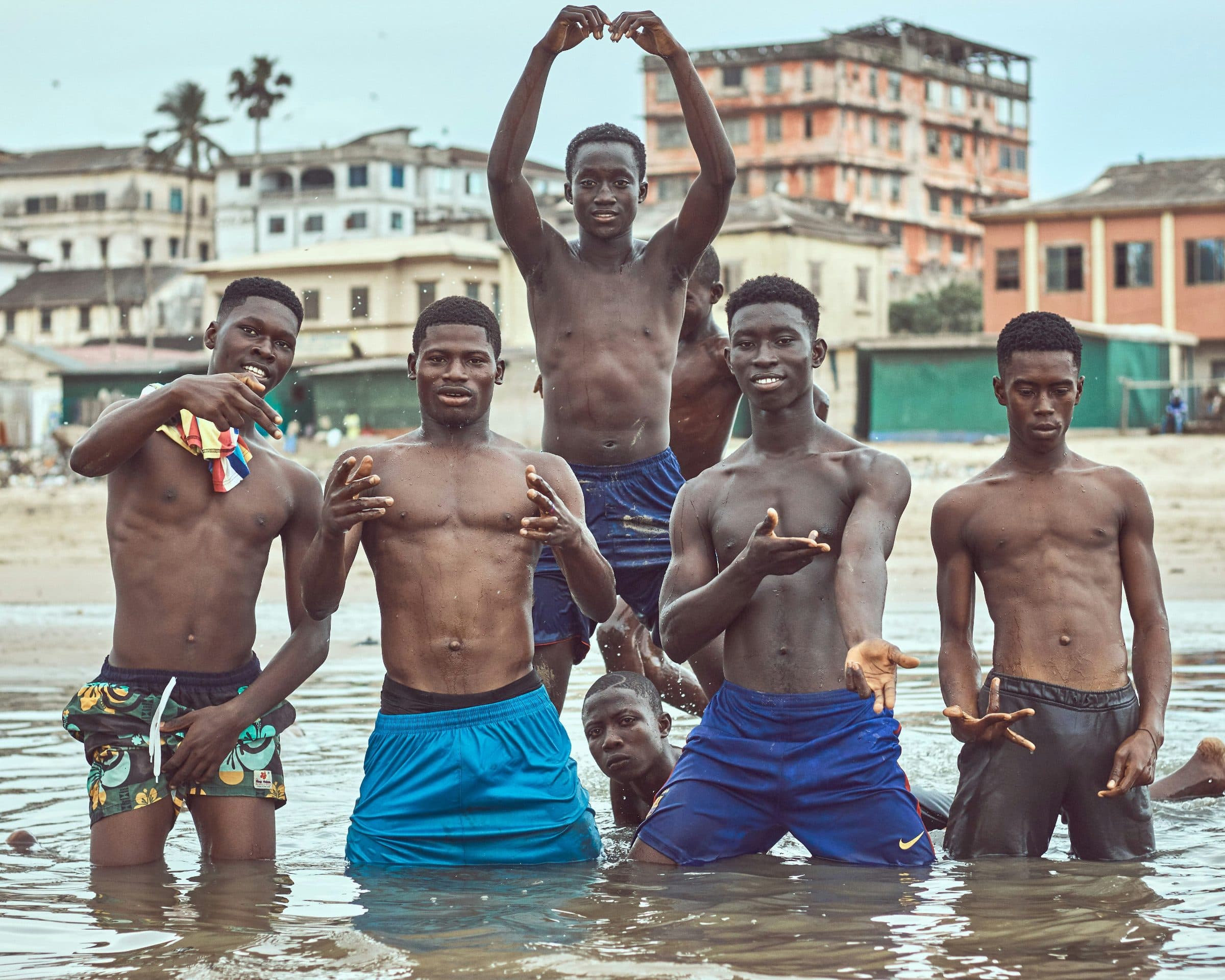
Gen Z slang.
I'm sure you're familiar with the term. It is used to describe words that have smoothly migrated from our TikTok feeds to our everyday lives, invading our conversations and group chats. These words are termed “Gen Z” by the media, and in turn by the people at large, due to the frequency of their use by said generation, but the origin of these words dates back decades, decades of history that the media has failed to highlight.
To say "the origin of Gen Z slang" is a limitation to the historical steps made for the language to exist. “Gen Z slang” is real-time evidence of how easily, or better yet, how little the media cares about the origin of a system, but rather who uses it more on determined platforms. Therefore, we know where the name comes from, from the population of users on those platforms, "Gen Z slang."
Claiming the language has a single origin is biased; there is no single origin for the language. However, there is a source. This is where AAVE (African American Vernacular English) takes the stage. Based on research, long before the likes of buzzin, period, and rizz became popular in mainstream media, they were already being used in most African American communities.
African people who were brought to America brought languages and linguistic systems that came into contact with English and eventually developed into distinct ways of speaking within African American communities. Over time, these patterns of speech developed their vocabulary, grammar and pronunciation, forming what is now recognised as AAVE. The media may have reduced it to slang, but the language has a lot more to it.
Some common examples of AAVE language are Finna (used when you are about to do something), Hella (which means very) and Hood (which means neighbourhood).1 These words are but a few in the vast vocabulary of the language, but AAVE isn't only defined by its words; it is also described by the manner in which you speak. An example is the “Habitual Be”, which refers to the removal of the verb “to be” from a sentence when speaking in the present tense.
An example of this is saying “she a teacher” instead of “she is a teacher.”
Another example of an AAVE language feature is the use of double negatives, which means using more than one negative in a sentence.
For example, you say “I ain't got no pencil” instead of “I don't have a pencil.”
Now, the aim of this article isn't to argue about the origins of these terms and systems of speech, because that is already a matter of fact. Rather, it sees the uniqueness in the oral and adaptability system of how a language specific to a community can, with the help of media, become a generational language, "Gen Z slang."
By a paraphrased meaning, "slang" is a term that refers to informal words or phrases that are commonly used in casual conversation. Slang has always played a quiet role in society, being the bridge between clear understanding and informal speech, but slang in any language rarely garners much attention, so why is "Gen Z slang" being put in such a spotlight? Now, the reason for this cannot be that the language itself is new, because it has been around for hundreds of years, even though it only became more popular in mainstream media about 3 years ago; rather, the rapid spread of the language is new.
The rise of streaming and short-form video platforms around 2020 and 2021 played a major role in this popularisation. Streamers like Kai Cenat and IShowSpeed, who became prominent figures in online entertainment, used AAVE in their streams, which was repeatedly heard, clipped, reposted and spread across platforms like TikTok and YouTube. This caused words and expressions already used within communities to reach billions of people in a very short period of time.
The language journey is very interesting because, unlike the ways of pop culture spreading, like from TV to music to films to magazines to gradual adoption, the "Gen Z slang" was from TikTok to algorithm to repetition to usage spanning into the vocabulary of millions. The effect of media on this language is proof of its ability to skip the transition of a language from one community to another, but almost transform a community language into a global language, for the sake of this article, a generational language: "Gen Z slang."
This leads us to a term I would call “identity crisis” because, as an African saying goes, "A thief who steals from many houses will eventually forget the way to their own house." This isn't to criticise the media; it's to highlight a flaw in its system. AAVE has reached a multitude of people worldwide, but only under the guise of “Gen Z slang.” This language, which reflects the rich and complex past of African American culture and continues to evolve to this day, has now been reduced to a mere vocabulary used mostly by Gen Z because the media focuses more on virality and far less on significance. No language should be framed as a new-age slang, but should be given the proper presentation it deserves, as it signifies a big part of a people's culture.