Growing up, I often heard about leaders like Abraham Lincoln and Nelson Mandela, whose impact created a blueprint for those who aspire to be true leaders. As an aspiring leader, I always sought to answer questions like:
What defines a leader?
What sustains a leader’s legacy?
What does leadership truly look like?
How does one become a leader?
These questions were my predominant thoughts for the longest time and formed the basis for my deep dive into what leadership is.
In today’s rapidly evolving world, it has become increasingly difficult to identify true leaders, as only a few leave lasting legacies while many remain unnoticed. Although leadership is often discussed in schools and in society, it is becoming increasingly difficult to pinpoint what makes a great leader or why some leaders are remembered while others fade into obscurity. Does this mean they were never truly leaders, or is there something deeper at play?
One of my best definitions of leadership comes from Dr. Myles Munroe:
Leadership is the capacity to influence others through inspiration, motivated by passion, generated by vision, produced by a conviction, and ignited by a purpose.
Guided by this definition, I have come to understand that true leadership is never accidental; it is revealed through impact, sacrifice, and service. The leaders we remember are those whose lives consistently reflected these qualities, and their stories continue to inspire us long after their time.
Nelson Mandela
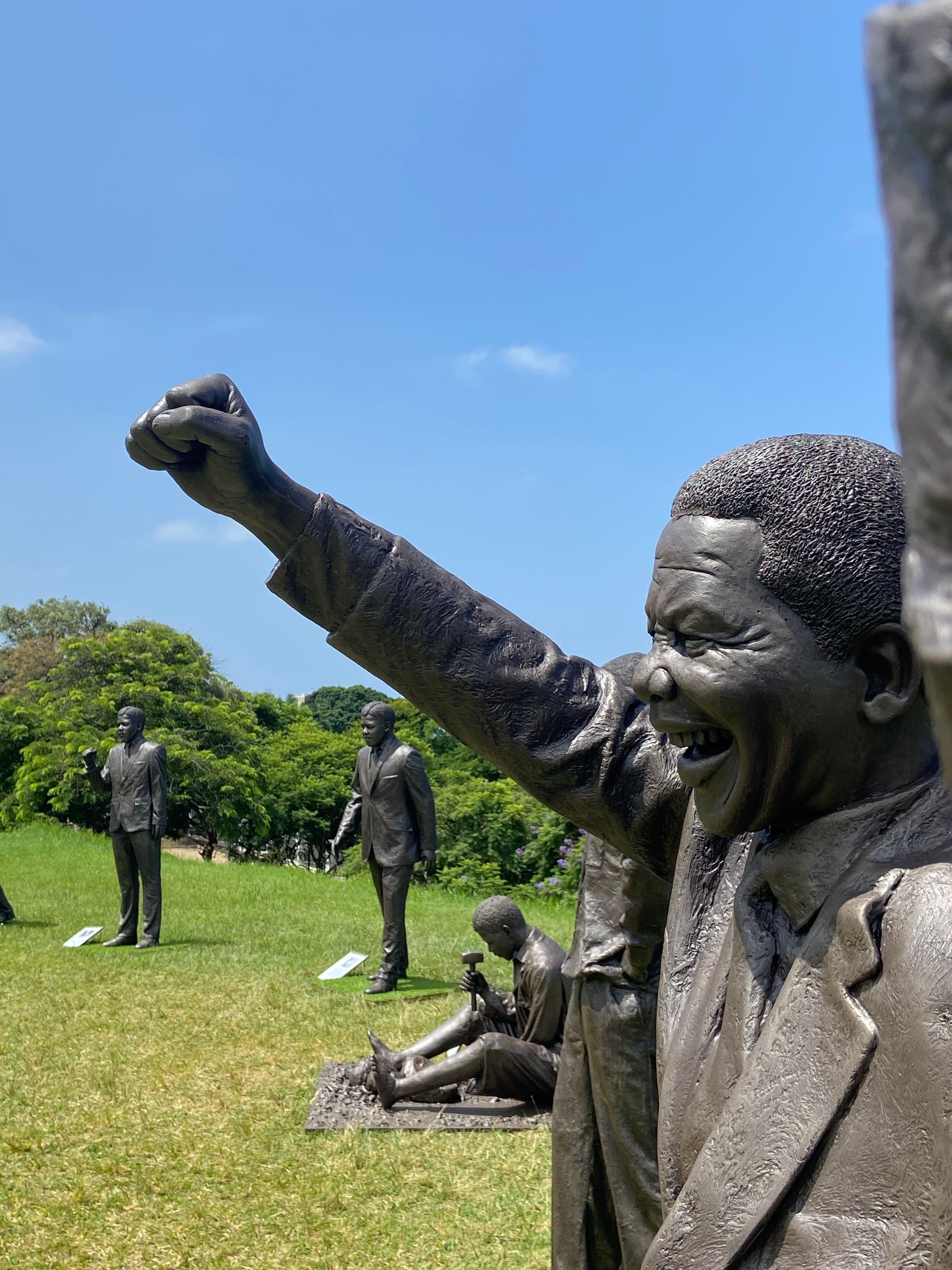
Nelson Mandela embodies leadership as the capacity to influence others through inspiration rather than force or position, and his life clearly demonstrates this impact. His unwavering passion for justice and human dignity, even after 27 years of imprisonment, became a source of inspiration to millions across the world. This passion was generated by a clear vision of a non-racial and democratic South Africa, where equality was not a privilege but a right. Long before he became president, Mandela’s vision inspired people who had never met him, proving that leadership is not defined by titles. I learned more about his journey through his sacrifices, resilience, and choices, and his servant-leadership approach. Despite enduring injustice, pain, and loss, Mandela consistently chose reconciliation over revenge, guided by a conviction and purpose greater than himself. He is remembered not simply because he held power, but because of the countless lives he transformed, and his legacy endures due to his tenacity, humility, and lifelong commitment to serving others. Mandela did not merely lead a nation; he healed it, showing that leadership is measured by the extent to which purpose is fulfilled and lives are touched. His leadership constantly reminds me that the call to lead is a call to serve, and the best leaders are always those who put others before themselves.
Martin Luther King Jr.
Similarly, Martin Luther King Jr. became a source of inspiration to millions through his courageous leadership during pivotal moments such as the Montgomery Bus Boycott, the Birmingham Campaign, and the 1963 March on Washington. His vision of a society where individuals are judged by the content of their character rather than the colour of their skin transcended borders and inspired people worldwide. I learned more about his journey through his unwavering commitment to nonviolence, informed by his Christian faith and the teachings of Mahatma Gandhi, which distinguished his leadership as both moral and transformative. King’s servanthood mentality shone through his willingness to endure imprisonment, threats, and ultimately death without compromising his principles. He is remembered not for personal acclaim, but for the profound and lasting change he brought to countless lives. His leadership reminds me that influence is most powerful when rooted in purpose, conviction, and the courage to stand for what is just.
Mother Teresa
When I think about Mother Teresa, her leadership strikes me not through authority or recognition, but through quiet, consistent acts of service toward those the world often overlooks. Her focus on “the poorest of the poor” defined both her vision and her impact. What stands out to me most is her belief that meaningful change begins one person at a time; she did not wait for systems or powerful figures to act. Instead, she lived out her conviction daily, demonstrating that love, expressed through small, intentional acts, could restore dignity to even the most forgotten lives. I learned more about her journey through her sacrifices, humility, and relentless service, which clearly demonstrate her servant-leadership mentality. She is remembered not because she sought fame, but because of the lives she transformed and the example she set for generations across cultures and religions. Her legacy continues to inspire millions because of her consistency, selflessness, and unwavering commitment to humanity. Mother Teresa reminds me that leadership is timeless when it is rooted in love, service, and genuine concern for others.
The legacies of these leaders have given me a clear understanding: they are remembered to this day not by coincidence, but because of the intentional choices, values, and sacrifices that shaped their lives. They show that when leadership is grounded in service and humanity, its influence is timeless.
References
· Leader Navigation. (n.d.). Leadership of Nelson Mandela. https://www.leadernavigation.com/leadership-of-nelson-mandela/
· GovLeaders.org. (n.d.). One person at a time: The Leadership Genius of Mother Teresa. https://govleaders.org/one-person-at-a-time.php?bcsi-ac-3bcf24e67305d691=254EB96900000004dEQHOJwSy2EHRhIoElU/KPprQFj9BQAABAAAAPczaAEgHAAAAAAAAJkqDwA=
· SocialStudiesHelp.com. (n.d.). Martin Luther King Jr.: His life, leadership and legacy. https://socialstudieshelp.com/american-history-topics/martin-luther-king-jr-his-life-leadership-and-legacy/