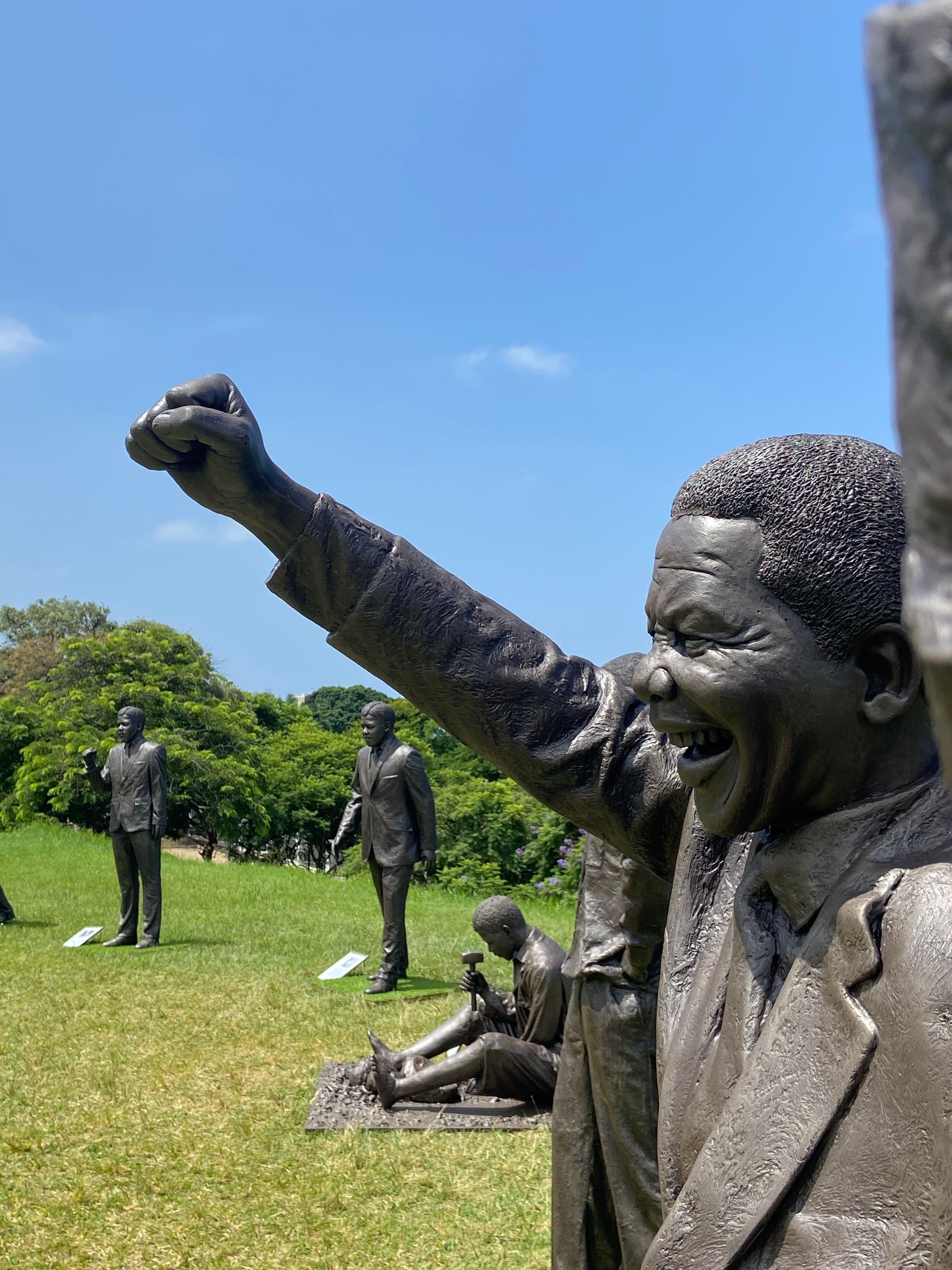
Nigeria's political history frequently reveals a preference for strong, decisive leaders (Adebogun et al., 2017; Asein, 2024; Olasunkanmi et al., 2024). This inclination is evident during periods of national uncertainty, where citizens tend to favour leaders who deliver immediate, tangible results rather than nebulous, long-term visions (Omosomuofa et al., 2025). The overall development, or state of underdevelopment, in Nigeria depends significantly on the leadership style adopted by its past leaders (Adebogun et al., 2017). The administration of President Olusegun Obasanjo from 1999 to 2007 serves as a compelling case study for exploring and understanding this national preference (Asein, 2024).
Who is a Transactional Leader?
A transactional leader operates through a system of structure, performance, and exchange, typically rewarding compliance and punishing inefficiency. This leadership style focuses on maintaining the status quo and achieving short-term objectives (Omosomuofa et al., 2025; Olasunkanmi et al., 2024). It is fundamentally an exchange process based on social exchange theory, in which leaders set goals, monitor outcomes, and fulfil contractual agreements with their employees (Olasunkanmi et al., 2024).
Key components of transactional leadership include a contingent reward system and management by exception (Olasunkanmi et al., 2024):
Contingent reward system: Leaders clarify roles and task requirements, offering material or psychological rewards in exchange for the fulfilment of contractual obligations or the successful delivery of tasks within stipulated timelines.
Active management by exception: Leaders actively monitor performance to identify errors, assess risks, and take precautions to avoid mistakes, ensuring standards are met.
Passive management by exception: Leaders who only take action after a problem has become serious, often waiting for things to go wrong before intervening.
This leadership style appeals to citizens who desire visible progress and a sense of control, especially when systemic problems are prevalent. For Nigerians, this framework promises order and rewards for adherence, rather than abstract ideals or long-term visions. Transactional leadership has been linked to task performance and organisational effectiveness (Agbai, 2023).
What Defines Obasanjo’s Leadership?
President Olusegun Obasanjo's tenure is often cited as a textbook example of transactional leadership (Omosomuofa et al., 2025). His approach was firmly based on measurable outcomes, central authority, and conditional loyalty. Notable actions that exemplify his transactional style include establishing anti-corruption agencies such as the Economic and Financial Crimes Commission (EFCC) and the Independent Corrupt Practices and Other Related Offences Commission (ICPC) (Adebogun et al., 2017). This was a landmark policy aimed at instituting good governance and recovering stolen funds from public officials, which helped to shore up Nigeria's international image, previously tarnished by long military dictatorships (Adebogun et al., 2017).
During Obasanjo’s tenure, there was demonstrable evidence of a commitment to anti-corruption efforts, including the arrest, trial, and jailing of the then Inspector General of Police for corruption. Other significant initiatives were telecom privatisation and cabinet reshuffles, often based on perceived performance, reflecting a results-oriented approach (Asein, 2024). His administration also secured substantial debt relief of approximately US$18 billion and created an Excess Crude Account (ECA) to manage oil revenue fluctuations, which helped the nation weather the 2007/2008 global financial crisis (Asein, 2024). These actions, coupled with his pragmatic economic policies, strengthened his public perception as a results-oriented leader. Obasanjo's leadership, particularly his focus on anti-corruption measures and economic reforms, has been linked to transactional elements, emphasising his conscientiousness and extraversion (Asein, 2024). Under his leadership, Nigeria's GDP grew significantly from US$59.37 billion in 1999 to US$278.26 billion in 2007, with an average economic growth rate of 7.82%. The per capita income also increased phenomenally, and Nigeria was classified among the "NEXT ELEVEN" countries by Goldman Sachs, signifying its potential as one of the world's largest economies (Asein, 2024).
When and Where Did This Preference Emerge?
The strong preference for transactional leaders in Nigeria intensified significantly during the democratic transition in 1999 (Adebogun et al., 2017). Nigerians were emerging from nearly two decades of military dictatorship and yearned for structure, stability, and economic revival. The populace was highly expectant of Chief Olusegun Obasanjo, viewing him as a "messiah" who could rescue the people and the nation from socio-economic and political turmoil (Adebogun et al., 2017).
Obasanjo's unique background as both a former military ruler and an elected president positioned him as someone capable of restoring order and delivering tangible improvements (Adebogun et al., 2017). His appeal resonated particularly among urban and elite circles that sought reform and control, who saw him as someone who had "seen both sides of life" (Asein, 2024).
Why Do Nigerians Prefer Transactional Leaders?
Nigerians often prioritise concrete results and efficiency over abstract political ideologies (Omosomuofa et al., 2025). In a society where institutions are frequently weak and corruption is endemic, leaders who can enforce order and deliver essential services are perceived as more effective (Adebogun et al., 2017). The prevailing challenges of underdevelopment, characterised by high unemployment, poverty, inadequate infrastructure, and insecurity, amplify the desire for leaders who can make a visible difference (Asein, 2024).
Obasanjo's successes in anti-corruption campaigns, the telecom boom, and debt cancellation earned him substantial credibility because these were clear, impactful achievements (Omosomuofa et al., 2025; Asein, 2024). This pragmatic outlook contributes to a national inclination towards "strongman" leadership styles, even at the expense of democratic consensus-building (Omosomuofa et al., 2025). Good governance, which is highly sought after, fundamentally involves integrity, efficiency, effectiveness, and economy in managing public affairs (Olasunkanmi et al., 2024). The absence of the rule of law, transparency, and accountability, along with pervasive corruption, is identified as a major impediment to national development in Nigeria (Omosomuofa et al., 2025; Tijani Suleman Olatunji et al., 2024). For generations, Nigeria has been described as "ruled and not led," a characterisation that has contributed to its developmental challenges (Olasunkanmi et al., 2024).
How Has This Preference Affected Democracy?
While transactional leadership can bring short-term stability and deliver certain outcomes, it also carries the risk of eroding democratic norms and institutions. When citizens become overly dependent on executive power, participatory governance and the rule of law can be sidelined (Adebogun et al., 2017). Instances from Obasanjo's presidency illustrate this potential drawback. His controversial third-term bid, though unsuccessful, highlighted a desire for prolonged executive power. His strong control over party politics and the perceived weakening of state legislatures further exemplify this concentration of power (Adebogun et al., 2017; Asein, 2024).
For example, Obasanjo was described as assuming the posture of a "personal ruler with wide dictatorial powers," relying on dispensing benefits to supporters while brutally suppressing opposition (Asein, 2024). Obasanjo frequently used the party machinery, resource allocation, and security agencies to threaten "recalcitrant" state governors, including Bola Ahmed Tinubu of Lagos, Joshua Dariye of Plateau, Victor Attah of Akwa Ibom, Ibrahim Adamu of Adamawa, Orji Kalu of Abia, and Chris Ngige of Anambra.
Civil society groups that opposed his undemocratic actions or unacceptable policies, such as the Nigeria Labour Congress (NLC) and the Academic Staff Union of Universities (ASUU), were reportedly emasculated (Adebogun et al., 2017; Asein, 2024). This pattern, where leaders may adopt different styles depending on the situation, as seen in the Odi Massacre incident, which resembled an autocratic approach, indicates a fluidity that can sometimes undermine democratic principles (Adebogun et al., 2017). This preference for a transactional approach, while addressing immediate needs, may ultimately hinder Nigeria’s deeper path toward a mature democracy, where transparency, accountability, and the rule of law are paramount (Adebogun et al.,2017; Asein, 2024).
Conclusion
Nigerians' preference for transactional leaders stems from an urgent need for clear, directive actions and tangible results in the face of complex national challenges. This preference is deeply rooted in the challenges of underdevelopment, which manifest as poverty, deprivation, and inadequate utilisation of resources (Tijani & Damisah, 2024). Obasanjo's presidency vividly exemplifies how this leadership style can be effective in implementing reforms and enforcing tough governance, particularly through initiatives like anti-corruption campaigns and economic revitalisation (Adebogun et al., 2017; Asein, 2024; Agbai, 2024; Olasunkanmi et al., 2024).
However, this pragmatic approach comes with a significant trade-off: it can potentially impede the deepening of democratic processes and undermine institutional checks and balances. For Nigeria to achieve sustainable and equitable development, future leadership must strive to blend the immediate effectiveness of transactional approaches with a strong commitment to democratic accountability, transparency, and the rule of law. Leaders are encouraged to be more transparent, discharge their duties responsibly, and shift from self-oriented to people-oriented leadership to promote good governance and sustainable development (Omosomuofa & Udoro, 2025; Adebogun et al., 2015; Agbai et al., 2023; Asein, 2024; Tijani & Damisah, 2024; Olasunkanmi et al., 2024).
References
Adebogun, O. B., Nnabuihe, O. E., & Ogbonna, S. (1999). Comparative Analysis Of Leadership Styles And Its Implication For Governance In Nigeria.
Agbai, E. P., Joshua, A. S., & Adesanya, C. M. (n.d.). Growth Analysis of The Impact of Human Capital Development Through Leadership in Nigeria.
Asein, A. A. (2024). Leadership and good governance: Catalysts for Nigeria’s economic growth and development. International Journal of Research and Innovation in Social Science, VIII(VIII), 956–966. https://doi.org/10.47772/ijriss.2024.808074
Olasunkanmi, F.-F. O., Ikediashi, D. I., & Ajiero, I. R. (2024). Assessing the factors of transactional leadership style for construction projects: a case of Nigerian construction industry. Journal of Engineering Design and Technology, 22(5), 1637–1654. https://doi.org/10.1108/jedt-01-2022-0012