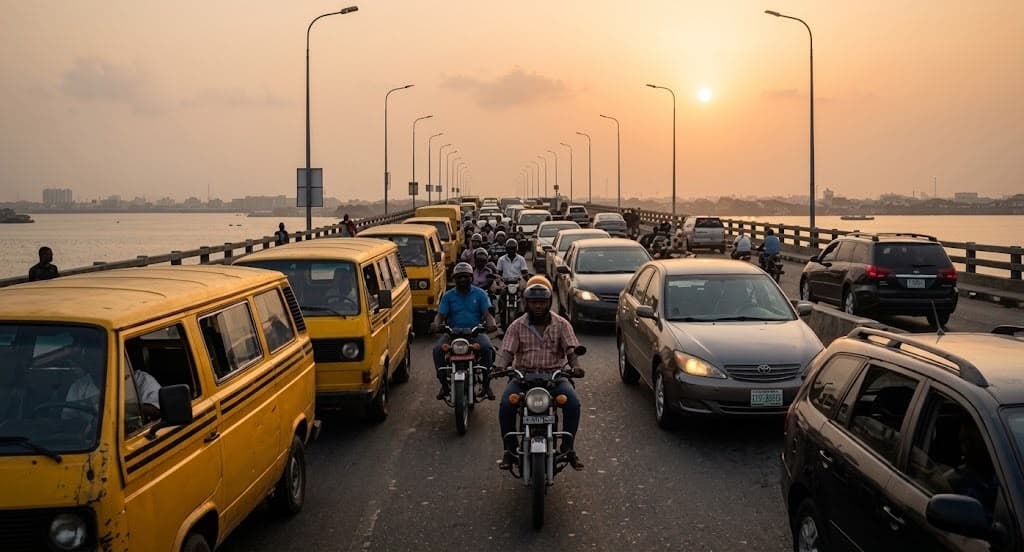
Uber, one of the world's largest ride-hailing companies, ceased all operations in Nigeria on the 2nd of September, 2026. Uber states that this decision is only part of its plans to restructure its global operations and prepare for a driverless future, including cutting roughly 10% of its global workforce and investing over $10 billion in autonomous driving technology1.
While some people choose to see the reasons for their exit as a consequence of Nigeria’s increasing fuel costs and currency volatility, others choose to see their exit as a decision to expand, a decision to fill the gap in the fairly new robotaxi market that silently operates in the US and UK. It makes you wonder how the remaining ride-hailing companies in Nigeria will fill the gap left by Uber and whether they, too, would follow in Uber’s footsteps.
According to a 2025 Ken Research report, Nigeria's urban mobility and ride-hailing market was valued at approximately $1.5 billion, based on a five-year historical analysis. This was driven by the growing urban population in Nigeria’s major cities and the sustained demand for convenient transportation solutions from millions of daily commuters. Uber’s exit does not change this fact. No matter how you see it, there is still a substantial market for ride-hailing services in Nigeria. Our inadequate formal public transportation systems have left the average commuter to seek more efficient and cost-effective transportation options, and these mobility companies are where they turn.
For years, the ride-hailing market in Nigeria has been highly competitive, with multiple companies such as Bolt, Rida, and InDrive competing for a share of Nigeria’s vast and growing economy. However, with a major player in the industry gone, the ride-hailing market can see a power shift. Uber had 267,000 active riders and approximately 7,000 driver-partners in Nigeria, according to figures disclosed by the company in 2017, catering to a large share of this market. But as it exits, it leaves behind thousands of commuters searching for new options and thousands of drivers searching for new opportunities. These opportunities can easily be provided by the companies that remain, but they will need to offer clear assurances to their newfound employees and customers.
Uber operated in Nigeria for more than a decade and became an integral part of how businesses and individuals conducted their day-to-day operations. “Uber for business” allowed organisations to oversee their employees' business travels on a global scale. It enabled them to set up courtesy rides for clients and group shuttles for their staff, even assisting these businesses in organising group meal orders through “Uber Eats”. Subscription plans were created to allow regular customers gain 5% discounts on all rides, priority customer support and access to top-rated drivers through their “Uber one” service. Uber provided its drivers with a steady income through different employment options, either as couriers with the ability to handle more frequent orders at lower rates, or as drivers with higher payouts and bonuses.
Nigerians became dependent on Uber's services, and after 12 years, Uber decided to stop all operations when it was most convenient for them. There is no indication that the Nigerian government included any operational clause requiring Uber to continue providing services in the country; no severance packages were provided to any of its drivers or couriers; and no compensation has yet been given to its most loyal customers. They have left thousands of drivers without a means to provide for their families, and businesses are restructuring their entire transportation and delivery schemes.
Uber did not provide their Nigerian employees and users alike with proper assurances of service. Their business model was designed for easy detachment, and we need to ensure the other ride-hailing companies do not follow suit. We must ensure stable employment and service provision for all Nigerian workers and consumers, and the government must change policies governing the departure of foreign organisations operating subsidiaries in Nigeria. Organisations that intend to leave should, at the very least, provide severance packages for all their employees who served them loyally for the duration of their operations in the country.
The Nigerian government also bears responsibility for the inconducive nature of Nigeria’s business market. Uber claims to have left Nigeria due to “evolving business priorities and investment focus across the continent”2, but certain market conditions may also have contributed to its exit. Nigeria's fluctuating fuel costs make it harder to maintain low prices for commuters; its high inflation increases the cost of living for drivers and prompts them to demand higher commissions; and Nigeria's volatile currency makes it difficult for dollar-centric organisations to maintain projected profit margins and revenue. Nigeria's ever-changing market conditions make it hard for foreign organisations to operate within its borders, posing a serious problem that the government must address to prevent further exits from the country by such companies.
Nigeria is a complex market to operate in, but that complexity does not change the fact that vast business opportunities still exist within its borders. Uber’s exit should not only be seen as a show of Nigeria’s increasingly unpredictable business environment, with rising inflation, increasing cost of living and a weaker consumer purchasing power, but it should be seen as an opportunity for the ride-hailing companies that are still operational in Nigeria to address these issues that have been brought to everyone's attention. These companies should focus on finding ways to properly compensate drivers while keeping rides affordable for commuters; creating sustainable solutions for operating in an environment with fluctuating energy costs; and assuring people, workers, and commuters alike that they will not abandon them, as Uber has.
We, as citizens, need to focus less on the problems and inadequacies of our current systems and more on how to provide solutions that will improve the very systems we so harshly criticise. Uber has decided to capitalise on emerging opportunities in the global transportation sector by focusing more on automation. Instead of dwelling on the negative connotations of their departure, we should focus on the opportunities they have left behind.
Footnote:
1 Uber, “Building a Simpler, Faster Uber,” September 2, 2026; Uber Technologies, Inc., “Q2 2026 Prepared Remarks,” August 5, 2026.
2 Uber, quoted in “Uber Exits Nigeria after 12 Years of Operation,” Premium Times, September 2, 2026.